
AI and Stewardship of the Earth from an Islamic Perspective
Written by: Mihir Shenoy
Artificial intelligence has taken a significant role in public discourse, as people discuss its psychological, political, economic, and even existential ramifications. Being accessed through “the cloud,” the worldwide network of servers that handles remote computing, AI is experienced through computer screens, whether through training the model or applying it. However, “the cloud” exhibits a much more concrete reality than its name suggests, as remote computing ultimately relies on physical infrastructure dedicated to that process.
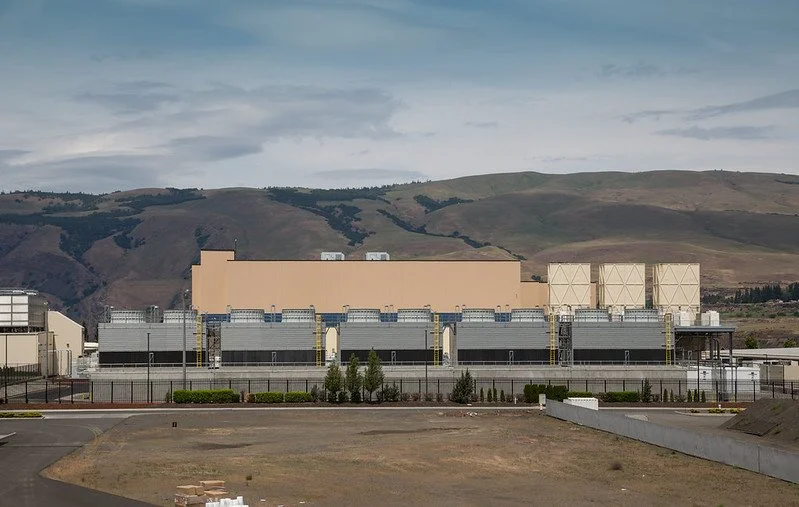
Google Data Center The Dalles, Oregon, USA. Source: Tony Webster
What's Really Going On Behind the Scenes of the “Cloud”?
Data centers, buildings that store and process massive amounts of data, have existed since the 1940s. Web browsing, social media, online banking, and generative AI training are some of the activities that need them. Economically, they exist as either colocation facilities, where companies rent individual data cabinets from the property owner, or hyperscale facilities, where the entire building is owned by a single tech entity, such as Amazon Web Services, Microsoft, or Google. Construction has accelerated with milestones in computing, such as the advent of the Internet, cloud computing, and the current era of AI training and consumption. Between 2026 and 2030, global data center capacity is expected to double from about 100 to 200 GW, generating $1.2 trillion in real estate assets.
Despite the rollout of this “AI Gold Rush,” these discreet industrial buildings remain somewhat invisible in our minds. However, local residents frequently protest against their construction, and over 230 environmental groups called for a moratorium on new US data centers in 2025. Amongst the complaints of these activists are two forms of environmental injustice: straining of the electricity grid and freshwater depletion.
Source: Sergei Starostin
Electricity
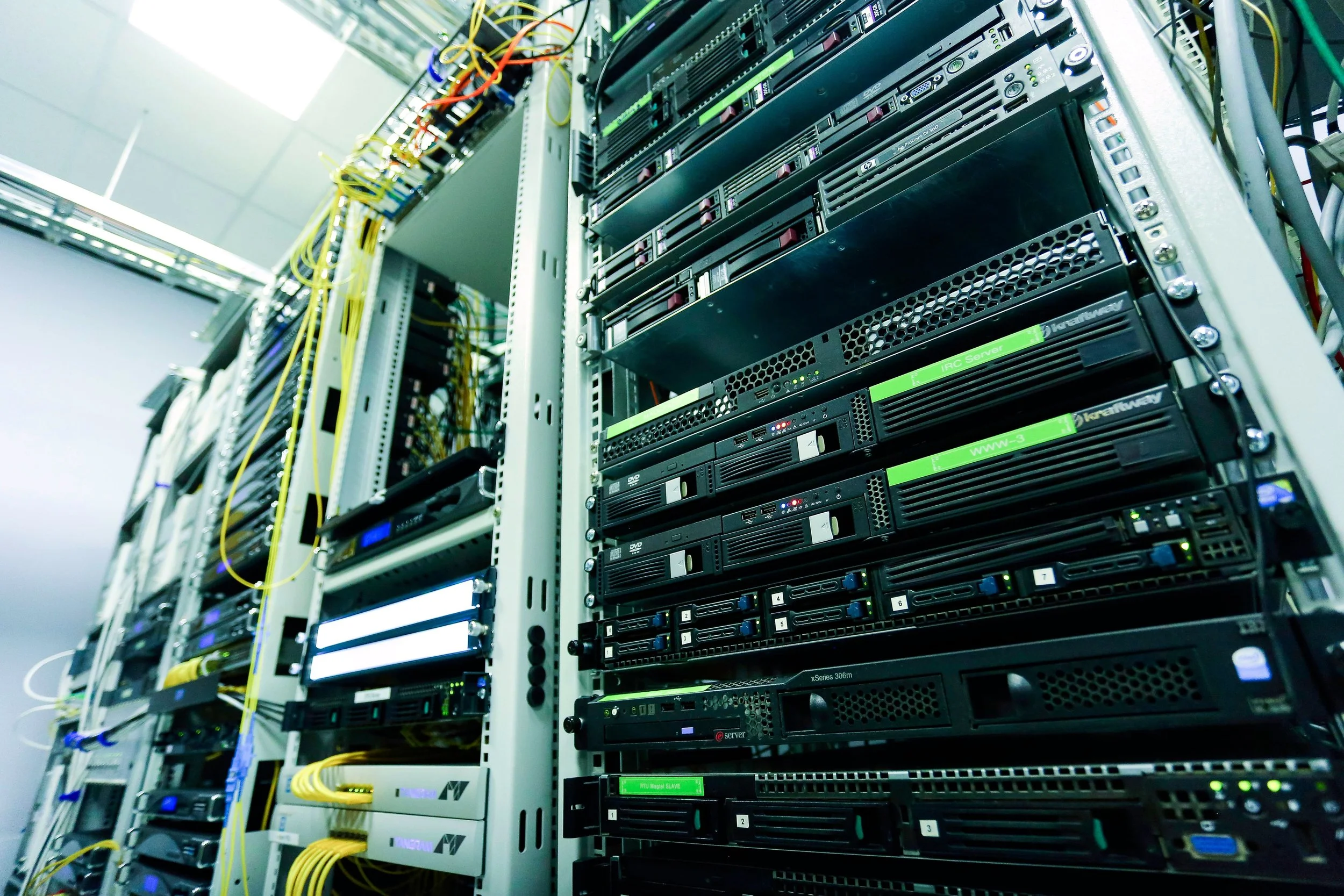
Imagine a room filled with cabinets, each containing powerful computers stacked on top of each other, running every minute of the day, every day. Expand this room to half a soccer field for a medium-sized data center, the full field for a large one, and even the size of New York’s Central Park for a data campus. This scale of computation requires an immense and consistent flow of electricity, which established power grids do not have the capability to deliver. The combination of building new power generation infrastructure, as well as price escalation from increasing demand with constant short term supply, has led to higher electricity rates.
Electricity prices are expected to increase by up to 40% between 2025 and 2030 in the US, disproportionally affecting Black and Latino households. Although utilities are expanding electricity generation, this investment includes extending the life of coal-fired plants and building new natural gas plants, delaying decarbonization goals and increasing local pollution. One study has shown that by 2030, the greenhouse gas emissions of the AI industry will equal that of adding 5 to 10 million cars to US roads, making net-zero emissions impossible.
Source: Jaxon Matthew Willis
Water
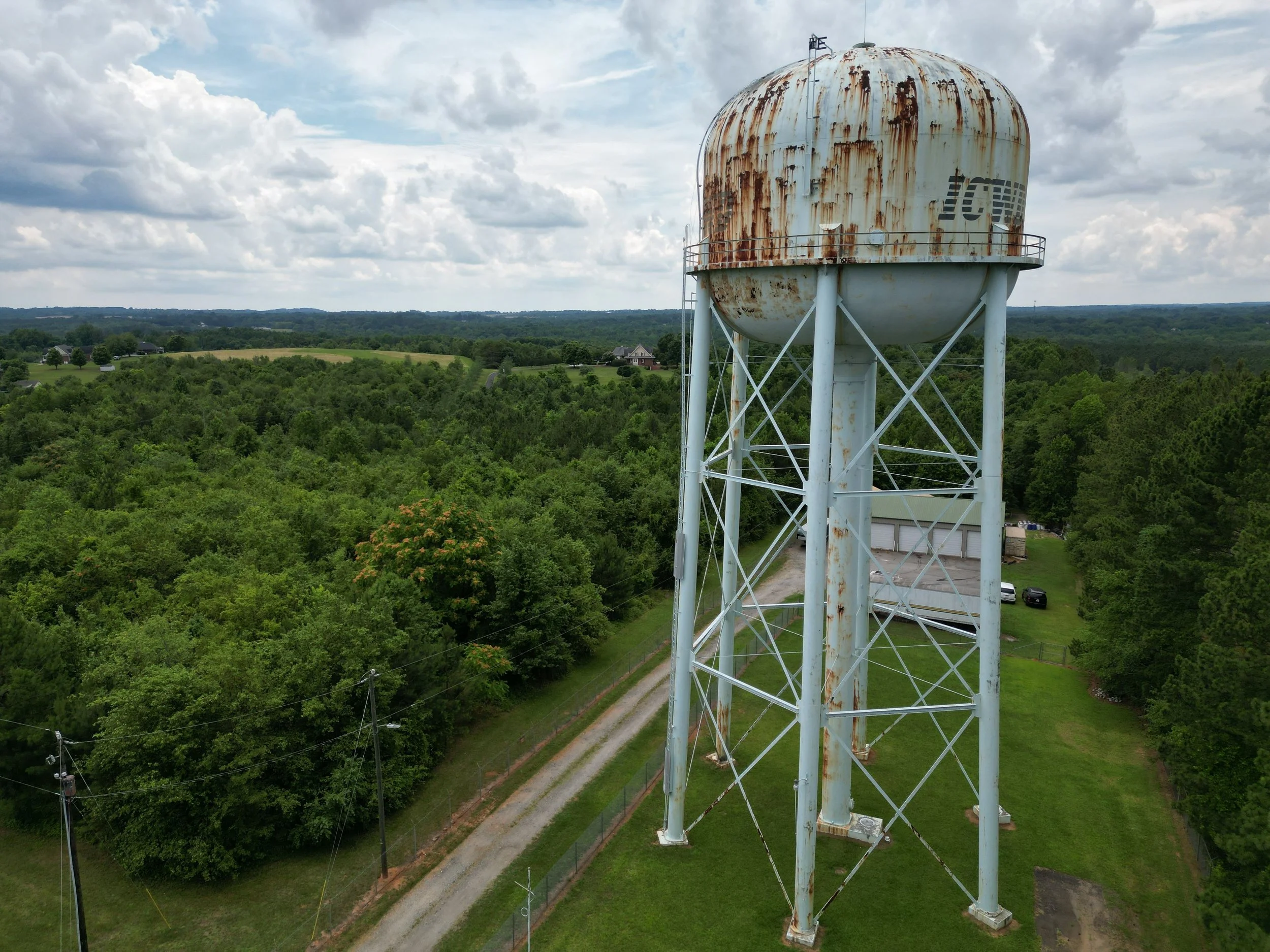
As a large building with densely packed servers requires significant energy input, so too will it require robust cooling systems to prevent components from overheating. Traditional HVAC systems generally do not meet these demands, requiring liquid cooling with freshwater. A large hyperscale data center can consume up to 18 million liters per day, with most of that water “lost” through evaporation.
One study has shown that in 2027, global AI demand will withdraw 4.2 to 6.6 billion cubic meters of water, or half the annual withdrawal of the UK. In the US, more than 80% of this water is from the public water supply, leading to concerns about water scarcity and contamination. In some regions, water battles are being anticipated, such as the US state of Nevada, where the Pyramid Lake Paiute Tribe of Native Americans anticipates that upstream data centers will decrease lake levels and threaten fish populations. Rolling Stone published an investigation in 2025 linking contamination of water used by data centers in the US state of Oregon to cancer and miscarriages.
Ṣalāḥ or Fasād?
Allah, the Glorious and Majestic, created this Earth as a dwelling place for us, and allowed us to use its diverse materials to construct and use buildings in a balanced way. This is the paradigm of ṣalāḥ (rectification), where buildings live peacefully with the land they rest on, neither depriving humans of personal or societal flourishing, nor disrupting the order of nature that Allah ordained. Opposite to this is the paradigm of fasād (corruption), displayed by wasteful extraction from nature and superficial human benefit. Even though fasād produces immediate gains for some people, with the order of nature disrupted, the ultimate societal outcome will be loss.
Allah says in Surah A’raf of the Qur’an:
“Do not spread corruption in the land after it has been set in order. And call upon Him with hope and fear. Indeed, Allah’s mercy is always close to the good-doers.” (7:56)
Commenting on this verse, Mufti Muhammad Shafi states:
“Therefore, included in the sense of the verse: لَا تُفْسِدُوا فِي الْأَرْضِ بَعْدَ إِصْلَاحِهَا (And do no mischief on the earth after it has been set in order) are crimes and sins which cause disorder in the world physically and outwardly - and also included there are sin, disobedience, and heedlessness towards Allah Ta’ala.”
Thus, the outward presence of disorder in the world is deeply intertwined with inward disorder in the hearts. When we do not have the sincerity in our hearts to do what is pleasing to Allah and beneficial for creation, we produce that which is disorderly, polluting, and excessive.
Applying this Islamic ethical framework to the data center gold rush, we must step back and think about where we are going. Our break-neck adoption of AI, experienced through individual computer screens, has veiled us from the reality of electricity and water siphoning that powers it. Perhaps this obsession reflects the state of our hearts, as we reach for immediate gratification and choose not to research the long term consequences.
With water specifically, we are admonished against wasting this precious resource by our Prophet, peace be upon him.
On the authority of Abdullah ibn ‘Amr, the Messenger of Allah, peace be upon him, passed by Sa'd when he was performing ablution, and he said:
'What is this extravagance?' He said: 'Can there be any extravagance in ablution?' He said: 'Yes, even if you are on the bank of a flowing river.'" (Ibn Majah, 425)
Source: Clay Elliot
If our Prophet, peace be upon him, discouraged us from using too much water in an act of worship, then what is the case for powering data centers? This is not an easy question, as cloud computing is used for beneficial and wasteful activities, but we must interrogate ourselves and our institutions to minimize our excessiveness.
May Allah bless us with hearts that remember Allah and are concerned with the rest of creation. May Allah allow us to adopt AI in a way that pleases Him, enabling ṣalāḥ and being free of fasād.