
Is Doing Qurbani Compulsory? Revisiting the Spirit of Eid al Adha Qurbani
Key Takeaways
Among the four Sunni schools, only the Hanafis consider Qurbani to be obligatory. The Maliki, Shafi’i, and Hanbali schools, along with the Twelver Shia school, consider it to be a recommended Sunnah.
Qurbani carried out today frequently violates Islamic rulings, such as not slaughtering animals in front of each other, taharah, and even the meat given to poor people is often being seen sold by the same people as what they really need is monetary assistance, not meat.
Scholars have given suggestions that Muslims may give charity money to the needy directly instead of offering animal sacrifice.

Eid al-Adha is among the most sacred and anticipated celebrations in the Islamic calendar. At its core lies the Eid Qurbani or Udhiyah, the act of sacrifice commemorating the submission of Prophet Ibrahim (AS), offering what was most dear to him to Allah (SWT).
Yet as the world has changed, and the realities of industrial animal agriculture, environmental degradation, and performative religious culture are coming into focus, we, the contemporary Muslims, must stop and think: Are we still honoring the true spirit of this sacrifice?
Or is it perhaps the case that we, unintentionally, have turned a spiritual act into one that contradicts its very essence?
The legal status of Qurbani: Fard or Sunnah?
It is a common misconception that Qurbani is mandatory for all Muslims. In truth, most Islamic schools of thought view it as a recommended Sunnah, not a fard (obligatory) act.
Among the four schools of thought within Sunni Islam, only the Hanafi school considers it obligatory upon able Muslims, while the Shafi’i and the majority among the Maliki and Hanbali consider it a recommended Sunnah.
Similarly, in the Twelver Shia Ithna Ashari school, the Eid sacrifice is considered obligatory for those at Hajj, while for every other Muslim, it is a recommended Sunnah.
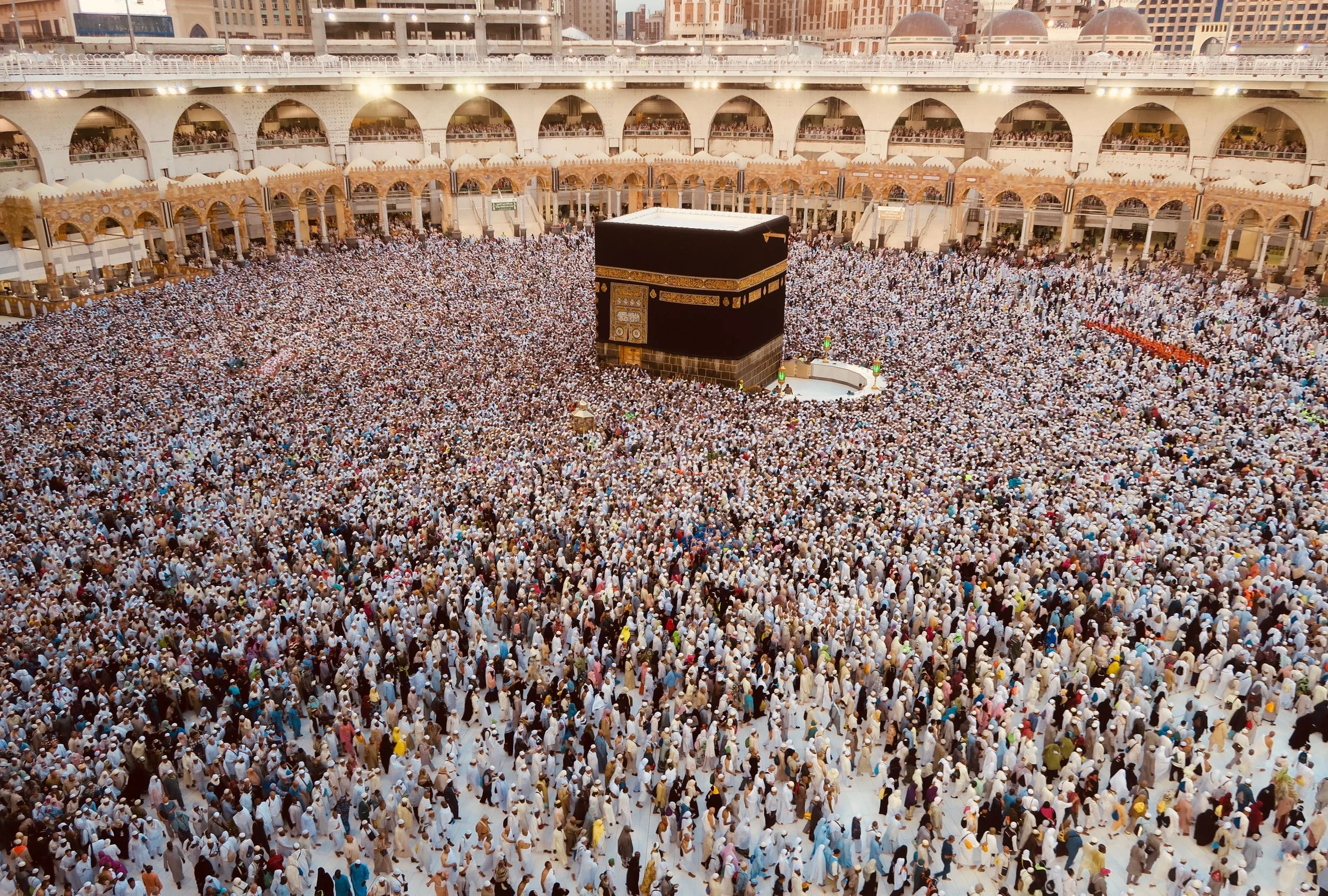
What is the purpose of Qurbani?
To put it succinctly, the true purpose of Qurbani is to gain taqwa (God-consciousness) through the spirit of sacrifice:
“Neither their meat nor blood reaches Allah. Rather, it is your taqwa that reaches Him.”
– The Holy Qur’an (22:37)
And caring for the community by distributing food as per the Sunnah:
“The point of Eid al-Adha is not the sheep or the meat; the point is sharing and community and above all, brotherhood and sisterhood in the true sense of the word.”
– Dr. Khaled Abou el Fadl
(FATWA: On the sacrifice of Eid al-Adha, 2016)
What was the attitude of the Sahaba (RA) toward Qurbani?
Even within early Islamic history, we find that revered companions like Abu Bakr and Umar (RA) would at times refrain from performing Qurbani, so people would not come to see it as compulsory:
“And Hudhayfa ibn Usayd said: I lived during the time of Abu Bakr and Umar (may God be pleased with them), and they did not sacrifice out of fear that people would believe it was obligatory.
The same has been related about Abu Masoud (may God be pleased with him), who said: Verily, I leave sacrificing, even though I am one of the most financially fortunate amongst you, out of fear that my neighbors may assume it was obligatory.
And there is much like this related to the righteous predecessors.”
(Source: Kitab al-I’itisam Vol. 2 by Imam al-Shatibi)
We argue that the goal here was to preserve the act's sincerity, ensuring that the sacrifice came from the hearts and taqwa of Muslims, not from social obligation.
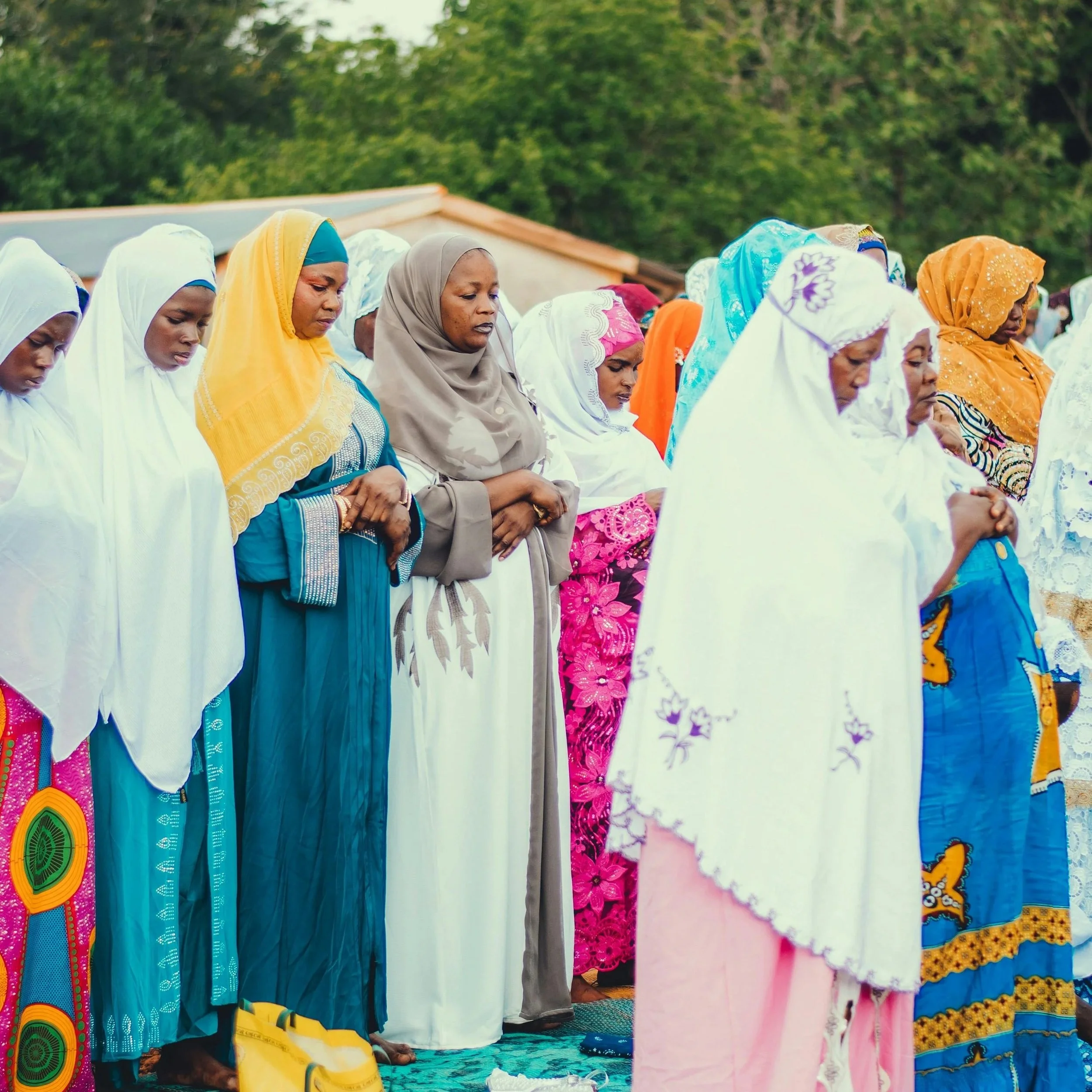
How we violate Islamic ethics on Eid al Adha
Islamic animal ethics and the guidance of the Prophet (SAW) are unequivocal in their emphasis on mercy and dignity for animals.
Among the etiquette taught to us is the instruction that animals should never be slaughtered in front of each other:
“He should not slaughter it [i.e. an animal] in front of another, because this is torture.”
- Shaykh Abd al-Muhsin al-Abbaad
(Sharh Sunan Abi Dawood, 14/212)
And yet we see slaughter being carried out hastily, in full view of other animals in numerous Muslim countries.
Similarly, the Prophet (SAW) always emphasized that animals must be treated with dignity, and their physical and emotional needs must be met.
The Prophet (SAW) once strictly reprimanded the caretaker of a camel to be mindful of Allah (SWT) in the treatment of animals under his care, because the camel had complained to the Prophet (SAW) that his caretaker kept him hungry and fatigued him (Sunan Abi Dawud, 2549).
However, in practice today, animals are kept in cramped conditions, transported long distances, often without food or water for long periods.
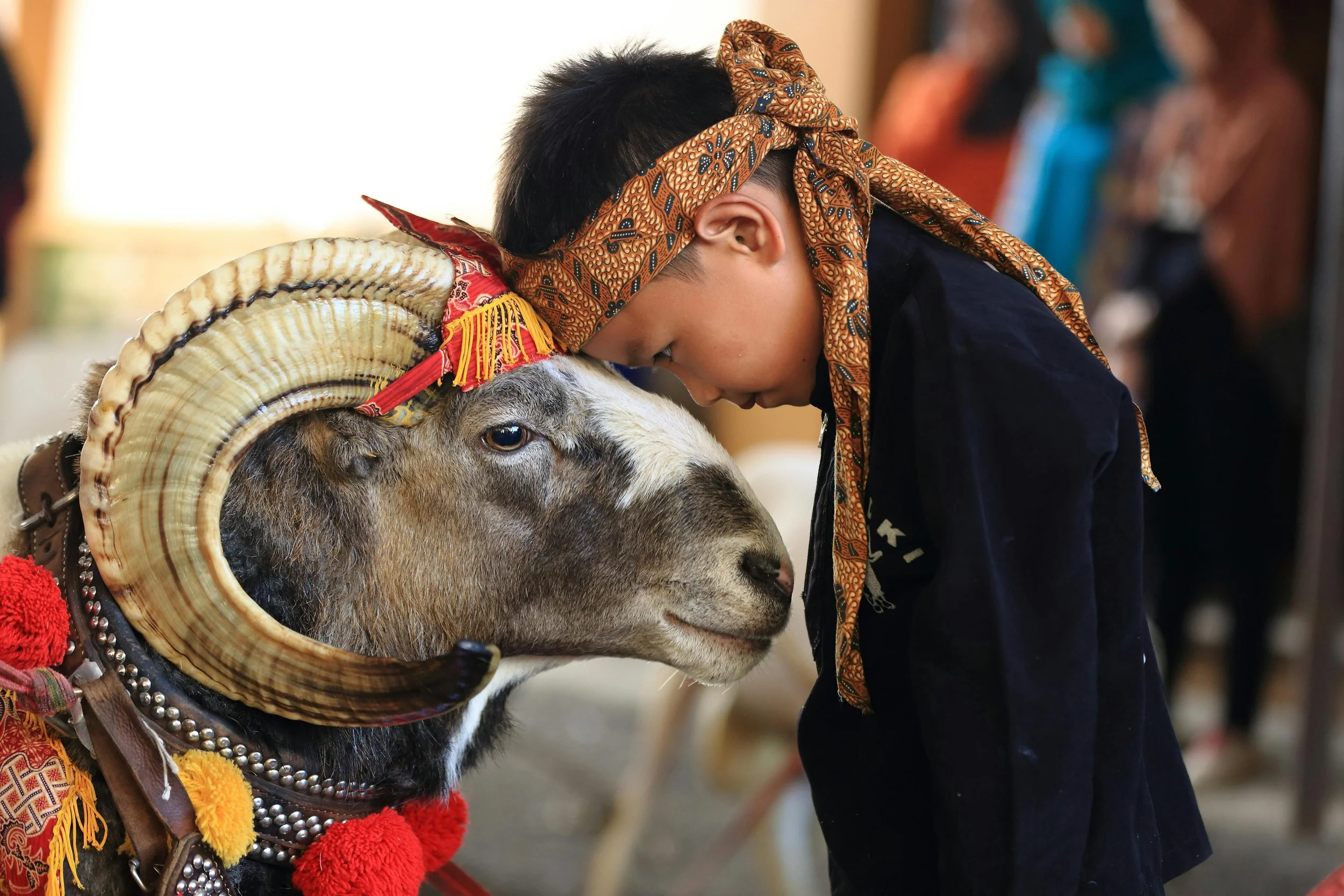
Taharah, i.e., cleanliness and purity, is one of the most central aspects of Islam, meant to be ensured in every aspect of life. And yet, what we see is that thousands of tons of animal waste and “rivers of blood” can be seen in the streets of Muslim countries after the Eid Qurbani.
Importantly, as we discussed above, the purpose of distributing meat to the needy at the time of the Prophet (SAW) was that meat was a delicacy only available to the elite during those days.
However, today, conditions are so materially different that poor people can be seen selling the Qurbani meat given to them, as what they truly need is not meat, but monetary support to afford a basic living.
(For videos on the same, please see our Instagram post from Eid al Adha 2025.)
The purpose of the Sacred Law (Shariah) is the welfare of all creation
And all acts of worship within the Sacred Law (Shariah) serve deeper objectives (Maqasid al-Shariah):
“The Sacred Law is a system for facilitating worship and realizing Allah’s objectives for all of His creation. Individual rulings of the Sacred Law serve to protect creation from harm and to promote their welfare.”
– Shaykh Musa Furber
(Intensive Animal Farming: Wrongs and Responsibilities, 2017)
And yet, today’s Qurbani results in environmental degradation, public health risks, the severe violation of animal ethics, and hollow ritualism. So, is there perhaps a better way to sacrifice, while still remaining within the Islamic tradition?
Yes. There is.
What might a spiritually conscious Qurbani look like today?
The aim here is not to dismiss the sacredness of the tradition, but to re-root it in the spirit of Islam: taqwah (God-consciousness), rahmah (mercy), and adl (justice).
So, what have scholars said on the matter?
“Offering sacrifice is not an obligatory ritual; it is only a recommended one. So, we are not obligated to observe the ritual year after year. That is the lesson both the pious Caliphs, Abu Bakr and Umar wanted to impart. […] Since sacrifice is not obligatory, a person can choose not to do it and give charity money.”
– Shaikh Ahmad Kutty,
Senior Lecturer and an Islamic Scholar at the Islamic Institute of Toronto
(Source: Kutty, A. (2020) ‘Animal Rights’, About Islam, 19 September.)
Similarly:
“While the zakat due in the udhiyah remains obligatory, the consumption and providing of meat is not. In other words, one may slaughter and donate meat; one may pay for the slaughter and donation of meat; or one may simply donate the amount of money due directly to needy families for the recipients to spend it as they deem fit. […] The point of Eid al-Adha is not the sheep or the meat; the point is sharing and community and above all, brotherhood and sisterhood in the true sense of the word. To my knowledge, among the classical jurists, it is well-established that money can be dispensed directly to the needy so that they may feed themselves in the way that they see most fit, and one does not need to be limited to the distribution of meat. In fact, some jurists have allowed the distribution of whatever food material is most expensive and unattainable by the needy, be it meat or some other consumption item.”
– Dr. Khaled Abou El Fadl,
Founder of the Institute of Advanced Usuli Studies
(Source: El Fadl, K. A. (2016) ‘FATWA: On the Sacrifice of Eid al-Adha’, The Search for Beauty: on beauty and reason in Islam. 15 June.)
Similarly, Hafiz Basheer Ahmad Masri, the late Islamic scholar from India, emphasized that animal sacrifice is a “means to serve a social need.” He highlighted alternatives, such as gifting money instead of meat, and pointed to verse 2:196 from the Holy Qur’an, which itself proposes fasting and charity as alternatives.
(Source: Masri, B. A. (2022) Animals in Islam. Woodstock, NY: Lantern Books, p.211-212)
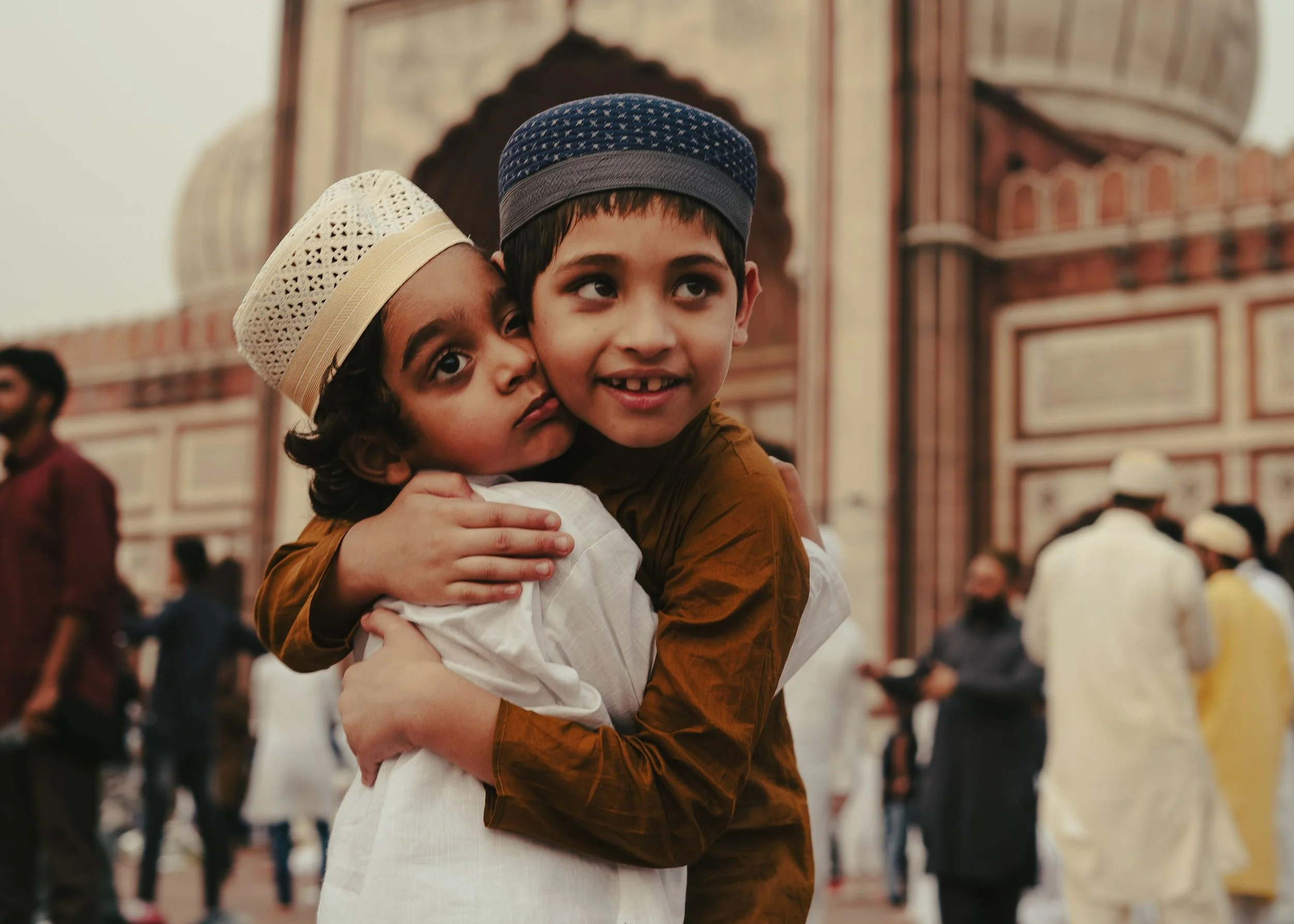
Reflecting on our Faith
This is not about blame or judgment. It’s about reflection (taddabur), the kind that Islam asks of us all:
“Do they not then reflect on the Quran? Or are there locks upon their hearts?”
– The Holy Qur’an (47:24)
Qurbani was never meant to be a celebration of meat, but of sacrifice and taqwa (piety).
“Neither their meat nor blood reaches Allah. Rather, it is your taqwa that reaches Him.”
– The Holy Qur’an (22:37)
And the sincerest sacrifices and acts of piety are often not those made on the outside, but those that challenge us internally – our habits, assumptions, and pride. The world has changed. Perhaps it’s time our understanding of sacrifice does, too.